Nguồn gốc:
Trung Quốc
Hàng hiệu:
Lishunyuan
Chứng nhận:
CE
Số mô hình:
LY-DS650
Features
|
|
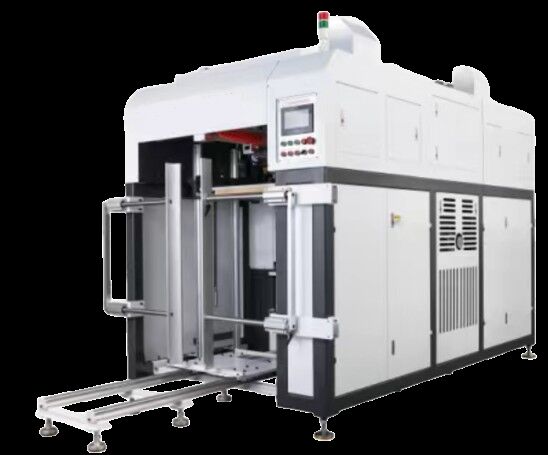
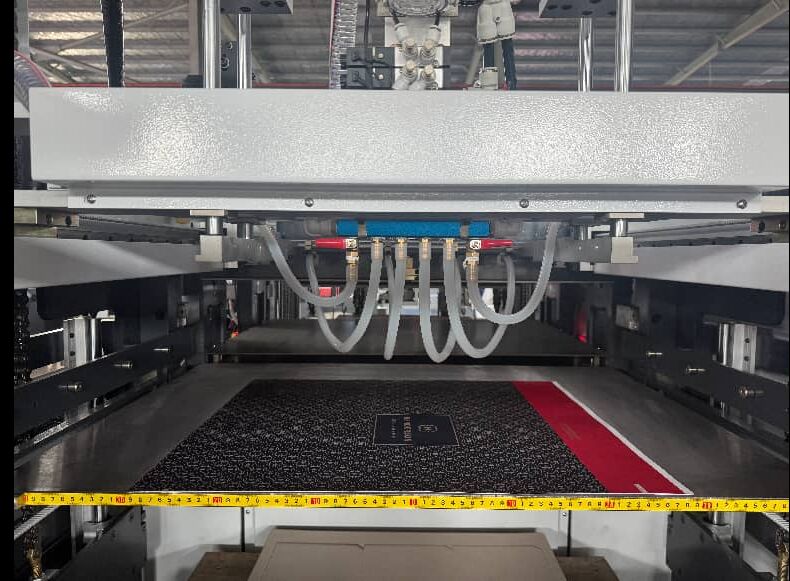
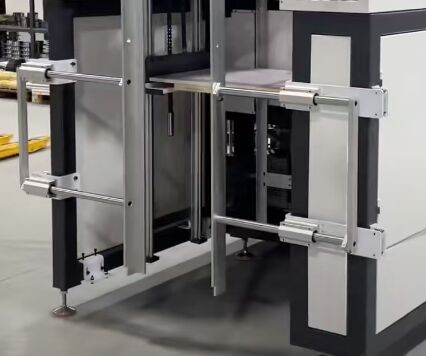
1200mm high circulating feeding platform board Single loading enables long-time continuous production, reduces workers’ feeding labor intensity, effectively cuts down downtime for material refilling, and greatly improves production efficiency.
|
|
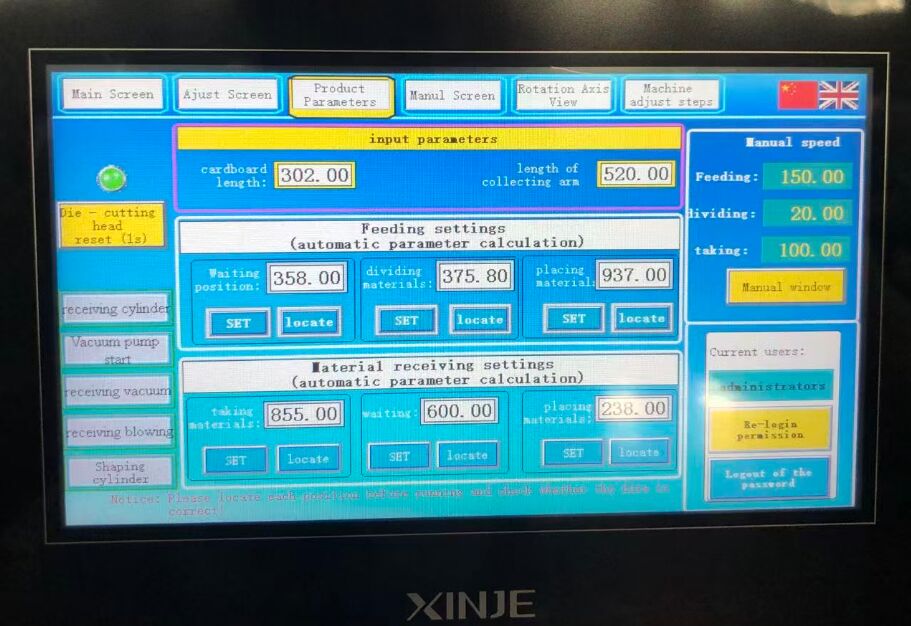
Touch screen man-machine interface Easy to operate. Simply input product dimensions, and the machine will automatically calibrate the feeding and receiving positions. Parameters can be adjusted flexibly according to production requirements for quick mold setting. Setting time in 20mins
|
|
|
Optimized die cutting tools for three materials: grey board, white cardboard and paperboard. With vertical cutting edges and superior performance, it realizes half-cut and full-break cutting without pre-scoring. The cuts are smooth, free of burrs and protrusions. After die-cutting, grey boards remain integrated and will not fall apart, facilitating waste removal
|
|
|
The eccentric gear and toggle lever mechanisms on both sides turn the motor's power into the up-and-down movement of the platens, generating the high pressure needed for die-cutting — this is what powers the cutting and creasing of the cardboard.
|
|
|
Main Drive Mechanism (Flywheel & Eccentric Shaft) Powers vertical reciprocating motion of platens Delivers stable, high-tonnage die-cutting pressure Reduces vibration, improves operational stability.
|
|
|
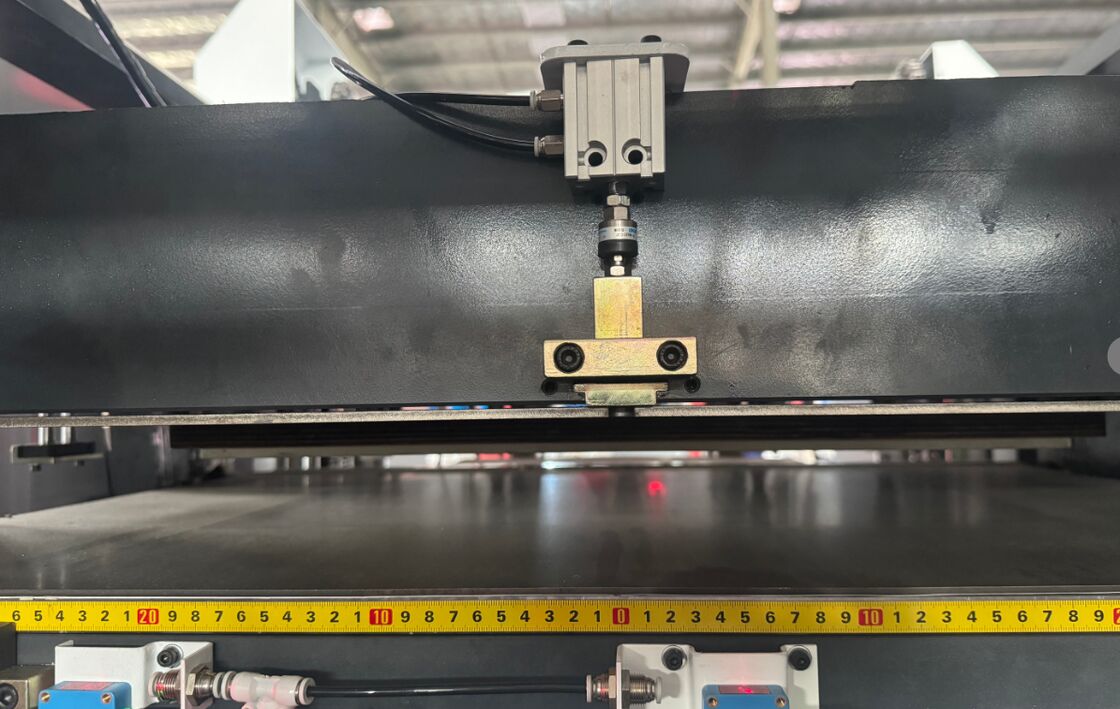
The die-cutting plate is firmly pressed onto the upper platform to prevent displacement and loosening during operation, ensuring high die-cutting registration accuracy. Compared with traditional bolt locking, the pneumatic pressure plate enables one-click locking and unlocking, greatly reducing die change and machine setup time.
|
|
|
The locking cylinder is equipped with an interlock function. The machine only starts die-cutting after the die plate is fully locked in place, preventing equipment failure and safety accidents caused by loose dies.
|
|
|
Safety protection devices Loading, adjusting, positioning of sheets, and s feeding and receiving, can all be carried out from outside the machine.Protect the safety of workers
|
Comparison:
| Comparison Item | Manual Die-Cutting Machine | LSY Die-Cutting Machine |
| Production Efficiency | Manual loading and unloading, low speed and low output | Automatic circular feeding, continuous production with greatly improved efficiency |
| Labor Cost | Dedicated operator required with high labor intensity | One operator manages multiple machines, reducing labor and employment costs |
| Die-Cutting Accuracy | Manual alignment with large errors and unstable quality | Intelligent automatic positioning, precise registration and high product consistency |
| Machine Adjustment & Plate Changing | Pure manually adjustment, complicated operation and time-consuming | Intelligent adjustment, rapid pneumatic plate locking for efficient plate replacement,setup time in 20mins. |
| Operating Performance | Severe vibration, average stability and high failure rate | Stable operation with low vibration, compact structure and reliable performance |
| Safety Protection | Basic protection with high operational risks | Built-in safety interlock devices for higher operational safety |
| Comprehensive Cost | Low initial purchase cost but high long-term labor consumption | Higher upfront investment, yet long-term cost reduction, efficiency improvement and higher profits |
Client Bottleneck & Key Challenge Analysis:
|
Advantages of Tie-point Design
|
Disadvantages of Tie-point Design
|
|
1. Ensure the integrity of the production process: The finished products and waste materials after die cutting will not be completely separated or scattered. It ensures stable sheet conveying, and guarantees smooth operation of subsequent procedures including paper feeding, delivery and box gluing, avoiding equipment downtime and product rejection caused by scattered sheets. 2. Improve the efficiency of waste removal and post-processes. The connecting points enable waste materials to fall off orderly at the stripping station and prevent scattered waste from jamming the equipment, which is especially suitable for automatic die-cutting machines. 3. 3. Low cost and mature technology. Making connecting points only requires simple notch processing on the die cutter without additional equipment, which effectively solves the problem of scattered sheets. It is a commonly used low-cost solution in the industry.
|
1. Increase follow-up processing procedures: The connecting points between products and waste materials require manual breaking or waste removal by professional equipment, which further increases the complexity of subsequent work and labor costs. Its efficiency is much lower than the non-connection process. 2. Prone to edge defects: After breaking the connecting points, protrusions, burrs or notches will remain on the product edges. Improper design may cause exposed defects after forming, affecting the appearance quality. In some cases, secondary trimming is required, resulting in higher labor costs. 3. Difficult connection point control: The width, quantity and position of connection points need precise adjustment. Excessively wide connections lead to difficult waste removal and edge damage; overly narrow connections cause premature breakage and sheet scattering during die-cutting, raising requirements for die making and machine debugging. 4. Limit process compatibility: For ultra-thin, high-stiffness or special laminated materials, tearing and delamination easily occur at connection points. For high-precision products such as electronic accessories, residual connection marks will also affect the application performance. 1 |
Gửi yêu cầu của bạn trực tiếp đến chúng tôi